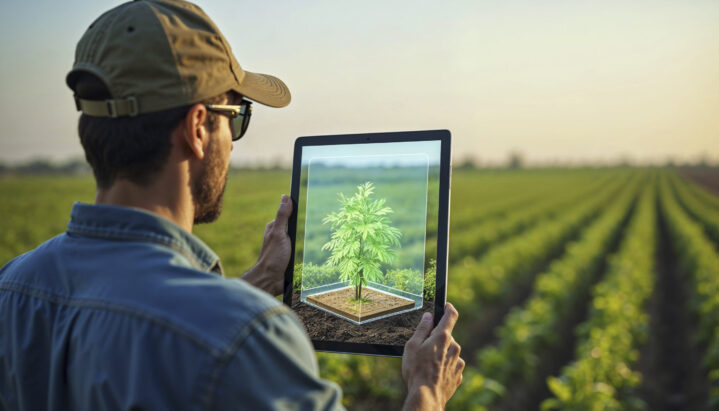
In the past decade, farms have quietly become some of the most data-rich workplaces in the world. According to global agriculture studies, modern farms now generate more data per day than many industrial factories did twenty years ago. That shift raises an important question for growers, suppliers, and consumers alike: how is all this data actually changing the way food is produced?
Precision agriculture is the answer taking shape across fields, orchards, and pastures. It refers to the practice of using digital tools to measure, analyze, and respond to conditions at a very fine scale. Instead of treating an entire field as one uniform unit, farmers now adjust planting, irrigation, fertilization, and harvesting based on specific zones, plants, or even individual square meters.
This approach is about sharpening farming knowledge, by combining experience with GPS positioning, connected sensors, aerial imaging, and artificial intelligence.
How Precision Agriculture Took Root in Modern Farming
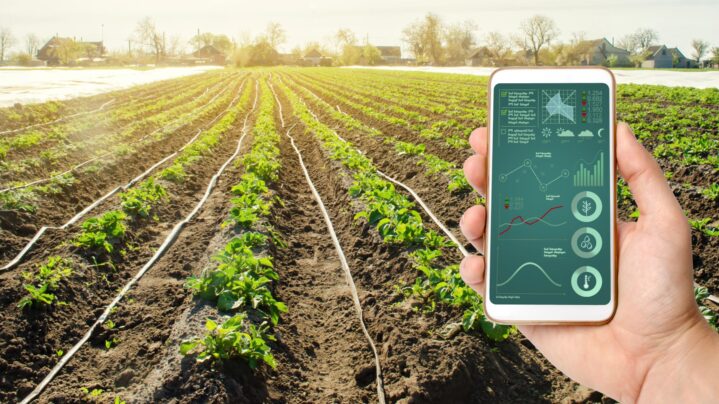
Precision agriculture did not arrive all at once. Its development followed a gradual path shaped by economics, environmental pressure, and technological maturity. Early adopters began experimenting with yield mapping in the 1990s, when GPS systems first became reliable enough for agricultural machinery. These early maps revealed something farmers had long suspected: yields varied widely within the same field.
As tools improved, this realization triggered a deeper change in mindset. Farming was no longer just about averages. It became about patterns. Soil composition, drainage, microclimates, and compaction all started to matter in measurable ways.
As farms become more precise internally, the ripple effects extend beyond the field itself. Accurate planting schedules, yield predictions, and harvest windows now influence how inputs arrive and how crops move once they leave the farm. Fertilizer deliveries, grain hauling, and seasonal transport planning increasingly rely on the same data that guides in-field decisions. In that sense, precision agriculture reshapes ag transport by making timing more predictable and volumes easier to anticipate. When logistics align with real field conditions instead of rough estimates, delays shrink, storage losses decrease, and the entire supply chain becomes more coordinated rather than reactive.
The shift was not driven by novelty. It was driven by necessity, as margins tightened and sustainability concerns grew.
GPS Technology and the End of Guesswork in the Field
Global Positioning Systems form the backbone of precision agriculture. GPS allows farm machinery to know exactly where it is within a field, often down to a few centimeters. This precision changes how nearly every task is performed, from planting rows to applying fertilizer.
Instead of overlapping passes or leaving untreated gaps, GPS-guided equipment follows optimized paths. That alone reduces fuel use, labor fatigue, and input waste. Over time, these small efficiencies add up to significant savings.
GPS data also supports:
- Variable-rate seeding that adjusts plant density based on soil productivity
- Precise fertilizer application that avoids overuse in low-need areas
- Repeatable field operations that preserve soil structure year after year
Perhaps most importantly, GPS creates a consistent spatial reference. Every data point collected later, whether from sensors or drones, can be tied back to an exact location. This shared coordinate system allows farmers to compare seasons, identify trends, and refine decisions with confidence rather than instinct alone.
IoT Sensors Bringing the Field to Life in Real Time
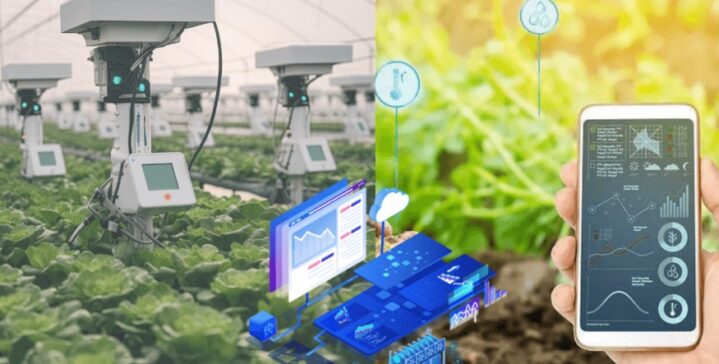
If GPS provides location, the Internet of Things provides awareness. IoT sensors placed throughout fields and equipment continuously collect data about soil moisture, temperature, nutrient levels, humidity, and equipment performance. Instead of waiting for visual symptoms, farmers can respond to early signals.
This real-time insight shifts farm management from scheduled routines to responsive systems. Irrigation, for example, no longer needs to follow fixed calendars. It can respond to actual soil conditions and weather forecasts.
Common IoT-enabled insights include:
- Detecting water stress before crops show visible damage
- Monitoring soil temperature to optimize planting windows
- Tracking equipment health to prevent costly breakdowns
Precision agriculture depends on feedback loops. Sensors create those loops by turning environmental conditions into actionable information.
Over time, sensor data builds historical records that improve long-term planning. Patterns emerge that help farmers understand how fields react to droughts, heavy rain, or heat waves, making future decisions more resilient.
Drones and Aerial Imaging Changing How Crops Are Seen
Walking a field reveals only what is visible at ground level. Drones change that perspective entirely. Equipped with high-resolution and multispectral cameras, drones capture detailed images that highlight differences in plant health, growth rates, and stress.
These images often reveal issues days or weeks before they can be spotted from the ground. Subtle changes in leaf color or canopy density can signal nutrient deficiencies, pest pressure, or irrigation problems.
Drone data is commonly used for:
- Early detection of disease outbreaks
- Assessing storm or flood damage quickly
- Evaluating crop uniformity across large areas
What makes drones particularly powerful is their flexibility. They can be deployed exactly when needed and flown at specific growth stages. Combined with GPS and sensor data, aerial imagery adds a visual layer that helps confirm or challenge assumptions, leading to more targeted interventions instead of blanket treatments.
Artificial Intelligence Turning Data Into Decisions
Data alone does not improve farming. Interpretation does. Artificial intelligence plays that role by analyzing vast datasets faster and more objectively than any individual could. AI models identify correlations and trends that might otherwise remain hidden.
For example, AI can analyze years of yield data alongside weather patterns, soil tests, and management practices to recommend optimal planting strategies. It can also predict disease risk based on current conditions and historical outbreaks.
AI-driven systems often assist with:
- Yield forecasting for better financial planning
- Optimizing input use to reduce cost and environmental impact
- Automating anomaly detection in sensor and drone data
What makes AI valuable is not that it replaces judgment, but that it provides structured insights. Farmers still decide what actions to take, but they do so with clearer evidence and reduced uncertainty.
Economic and Environmental Benefits in Real Terms
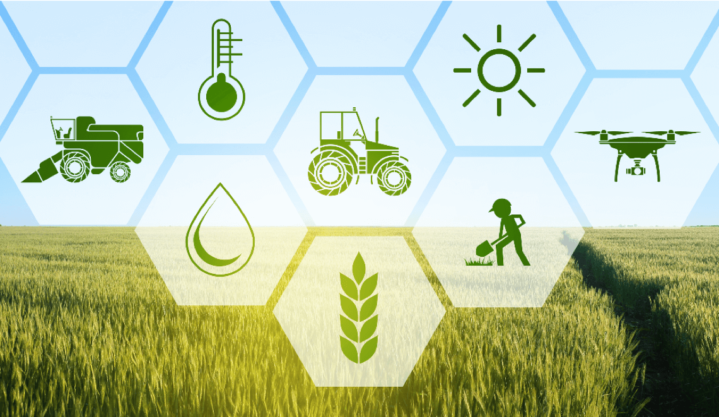
Precision agriculture is often discussed in abstract terms, but its benefits are measurable. When inputs are applied only where needed, costs decline. When crops receive more tailored care, yields stabilize or improve. When fields are monitored closely, environmental damage decreases.
Below is a simplified comparison illustrating the difference in approach:
| Aspect | Conventional Approach | Precision Agriculture |
| Input application | Uniform across field | Variable by zone |
| Water usage | Fixed schedules | Sensor-driven |
| Yield variability | Often unexplained | Mapped and analyzed |
Under the table, the key takeaway is balance. Precision agriculture helps align productivity with stewardship. Reduced runoff, lower chemical use, and improved soil health all contribute to long-term sustainability without sacrificing profitability.
Barriers to Adoption and Practical Challenges
Despite its advantages, precision agriculture is not without obstacles. Technology costs, data integration challenges, and learning curves can slow adoption, especially for smaller operations. Farmers must evaluate which tools genuinely add value rather than adopting technology for its own sake.
Common challenges include:
- Managing large volumes of data from different platforms
- Ensuring compatibility between equipment brands
- Developing confidence in data-driven recommendations
Another concern is connectivity. Rural areas may lack reliable internet access, limiting real-time data transmission. However, offline data collection and delayed syncing increasingly address this issue.
Successful adoption often happens in stages. Farmers start with one tool, such as GPS guidance, then gradually integrate sensors, drones, or analytics as familiarity grows.
The Future Direction of Precision Agriculture
Precision agriculture continues to evolve. Advances in machine learning, satellite imaging, and automation suggest even greater integration ahead. Autonomous machinery, predictive modeling, and closed-loop systems are already emerging in experimental and early commercial settings.
Future developments are likely to focus on:
- More intuitive interfaces that simplify data interpretation
- Stronger integration between field data and market planning
- Greater emphasis on carbon tracking and sustainability metrics
What remains constant is the goal. Precision agriculture seeks to make farming more informed, resilient, and adaptable. It respects the complexity of natural systems while providing tools to navigate that complexity with clarity.
Technology and the Human Element
Precision agriculture is not about turning farms into laboratories. It is about giving farmers better visibility into the land they already know well. Technology enhances awareness, but human judgment remains central.
As tools continue to mature, the most successful operations will be those that blend data with experience, flexibility with discipline, and innovation with practicality. Precision agriculture works best when it supports decision-making rather than dictating it.
In the end, farming remains a relationship between people, land, and time. Precision tools simply help that relationship become more responsive, efficient, and sustainable in a world where every input and every decision matters more than ever.