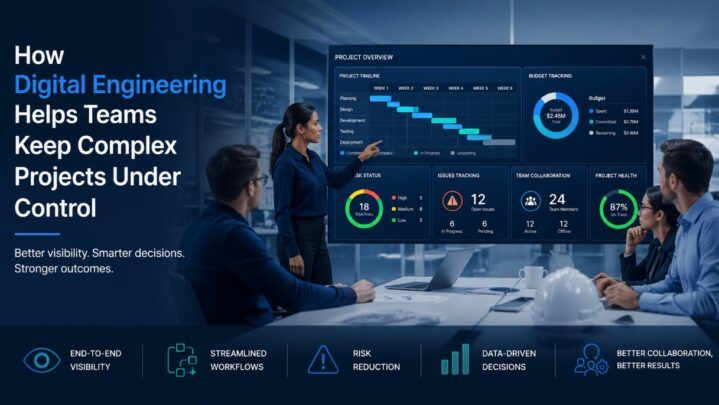
Complex projects rarely fail because of one big mistake. Most of the time, things slip through small gaps. A missed update here. A version conflict there. A delay that nobody flagged early enough.
Digital engineering changes how teams handle those gaps. At its core, digital engineering uses shared data, models, and systems so everyone works from the same information. That reduces confusion and helps teams make decisions based on current data, not outdated files.
In real projects, that means fewer disconnected steps. Instead of passing files back and forth, teams work in environments where updates are visible instantly. That shift alone solves a lot of coordination issues that slow projects down.
Why teams struggle with complex projects in the first place
Most teams do not struggle because they lack talent. They struggle because the system they are working in makes coordination harder than it should be.

Here are the patterns you see across many projects:
- Work gets split across different tools that do not talk to each other
- Teams rely on status meetings instead of real data
- Changes are tracked manually or inconsistently
- Decisions happen without full context
Once a project grows, these issues multiply. That is when delays start stacking up, and nobody has a clear picture of what is happening.
Digital engineering addresses this by creating one connected system where tasks, data, and decisions are visible. That visibility is what keeps projects under control.
Where digital engineering services actually fit in
When teams start adopting digital engineering, they usually do not build everything from scratch. They rely on structured solutions and frameworks that connect tools, workflows, and data.
In many cases, companies turn to specialized digital engineering services to set this up properly. These services focus on creating connected environments where data flows across systems, teams can collaborate in real time, and decisions are backed by accurate information.
That integration step matters more than the tools themselves. Without it, teams still end up working in silos, just with more software.
Real-time visibility changes how teams manage work
One of the biggest shifts with digital engineering is how teams see progress. Instead of waiting for updates, they can check the current state of the project at any moment.
Most modern engineering systems provide dashboards, timelines, and live reporting. That gives project managers a clear view of what is moving and what is stuck.

Here is how that plays out in practice:
- Tasks are tracked as they happen, not after the fact
- Bottlenecks become visible early
- Teams adjust timelines before delays become critical
This is not about more data. It is about having the right data at the right time. When teams can see problems early, they can act before things escalate.
Collaboration becomes structured instead of chaotic
In many complex projects, collaboration is messy. People send files, make changes locally, and then try to sync everything later. That creates version conflicts and confusion.
Digital engineering changes that by centralizing data and allowing teams to work in shared environments. Everyone sees the same model or dataset, and updates are tracked automatically.
That shift leads to a more structured workflow:
- Teams work on shared models instead of isolated files
- Changes are recorded and traceable
- Communication happens around the data, not outside of it
The result is fewer misunderstandings and less time spent fixing coordination issues.
Automation removes a lot of hidden workload
There is a lot of invisible work in project management. Scheduling updates, sending reminders, tracking dependencies. These tasks do not move the project forward, but they take time.
Digital engineering systems automate much of that. Routine updates, notifications, and tracking can run in the background, freeing teams to focus on actual work.

A simple breakdown helps explain where automation makes a difference:
|
Area |
Without digital engineering |
With digital engineering |
| Task tracking | Manual updates | Automated tracking |
| Reporting | Weekly summaries | Real-time dashboards |
| Coordination | Meetings and emails | Shared systems |
| Risk detection | Late discovery | Early alerts |
Automation does not replace people. It removes repetitive tasks that slow them down.
Better data leads to better decisions
Many project decisions are made with incomplete information. Teams rely on assumptions because the data is scattered or outdated.
Digital engineering solves this by centralizing data and making it accessible in real time. That allows teams to base decisions on actual conditions, not guesswork.
Centralized data reduces errors and helps teams respond faster to changes.
This is especially important in large projects where small decisions can have big downstream effects. When teams work from the same data, alignment improves naturally.
Risk management becomes proactive, not reactive
Risk is part of every complex project. The difference is how early teams can see it.
Digital engineering tools often include monitoring and predictive features. These systems can flag potential issues based on patterns, delays, or resource conflicts.

In practical terms:
- Teams identify issues before they impact timelines
- Managers can test scenarios using digital models
- Adjustments happen earlier in the process
This approach reduces the need for last-minute fixes, which are usually the most expensive and disruptive.
What teams need to get right when adopting it
Digital engineering is not a quick fix. Teams need to approach it carefully or they risk creating more complexity.
There are a few areas that require attention:
- Tool integration needs to be planned, not rushed
- Teams need training to use systems effectively
- Processes should be updated alongside tools
Adoption takes time. Systems need to align with how teams actually work, not the other way around.
When done right, the system becomes part of the workflow. When done poorly, it becomes another layer of friction.
Frequently asked questions
Keeping control is really about consistency
At the end of the day, control in complex projects comes down to consistency. Consistent data. Consistent processes. Consistent visibility.
Digital engineering supports that by connecting systems, automating routine work, and giving teams access to real-time information. It does not remove complexity, but it makes that complexity manageable.
Teams that use it well do not rely on constant check-ins to stay aligned. They rely on systems that keep everyone working from the same source of truth.
That shift is what keeps projects on track, even as they grow.