
Most cybersecurity strategies focus on network perimeters, access logs, and data flows. But your physical security operations collect incident data that never reaches your threat intelligence team. A breach at your loading dock, unauthorized access to a server room, or a social engineering attempt caught by a security officer on patrol represents real evidence of threat activity.
Yet in most organizations, this data sits in separate systems, never correlating with digital security events. Understanding how to bridge this gap is critical to building a complete threat picture.
Key Takeaways
- Physical security incidents often precede or accompany cyberattacks, but siloed operations teams don’t share data with cybersecurity.
- Integrated incident tracking systems give both teams visibility into threats that span physical and digital domains.
- Real-time incident reporting from patrol and guard operations reduces detection lag and improves response coordination.
- Centralized documentation of access patterns, facility breaches, and employee behavior creates actionable intelligence for both security functions.
Why It Matters: The Data Gap That Creates Blind Spots
Cybersecurity teams operate under the assumption that their monitoring systems catch all relevant threats. In reality, attackers often scout physical locations before executing digital attacks. They test building access, observe employee routines, and identify vulnerable entry points in person. When your security patrol operations are disconnected from your cybersecurity monitoring, these reconnaissance activities go unnoticed at the strategic level.
Consider a scenario where someone repeatedly attempts to access a restricted area, claiming to be a contractor. A guard notes it in a local incident log. Days later, credentials from that area are compromised in a phishing attack.
Your cybersecurity team investigates the credential compromise, but the physical reconnaissance attempt never surfaces in the correlation because it lives in a different system, reviewed by a different team. The attack pattern remains invisible. When security patrol services are tracked in real-time and fed into centralized incident systems, that gap closes immediately. The guard’s observation becomes part of the threat narrative.
Beyond reconnaissance, physical security events signal insider threats, supply chain compromise, and facility vulnerability. A contractor accessing the server room without authorization isn’t just a physical security problem. It’s a potential backdoor installation risk. Stolen access badges represent compromised credentials.
Tampering with building infrastructure could mask network modifications. None of these make sense to cybersecurity teams if they only see the network side of the attack.
The Real Cost of Siloed Security Operations
Data Silos Delay Threat Detection
When physical security and cybersecurity operate independently, information travels slowly between teams. A security officer documents an incident at end-of-shift.
The report sits in a local database. A supervisor reviews it the next morning. Days later, if anyone thinks to share it with the cybersecurity team, the timeline is already cold.
By contrast, real-time incident capture and centralized documentation mean the moment a physical security event occurs, it’s available for correlation with digital monitoring. This reduces detection lag from days to minutes.
Incomplete Incident Investigation
Cybersecurity teams investigate breaches by analyzing network logs, access controls, and system activity. But those logs answer only part of the question. Who physically accessed the server room during the window when unauthorized changes were made? Was there an unusual visitor in the building that day?
Did surveillance footage capture the person? When physical security data remains separate, investigations stay incomplete. Cybersecurity teams can’t answer these questions without manually reaching out to security operations, causing delays and creating room for miscommunication.
Missed Patterns in Threat Intelligence
Attackers often conduct multiple reconnaissance passes or test different entry points across facilities. A security patrol logs an attempted tailgate at one entrance. Later, another guard observes suspicious activity at a different location. Individually, these events might seem routine. But when compiled in a centralized system, they reveal a pattern of sustained reconnaissance.
Cybersecurity teams feeding on this integrated data can adjust their monitoring stance, increase access logging, or notify business leadership that active targeting may be underway. Siloed systems make pattern detection impossible.
How Integrated Incident Systems Bridge the Gap
Real-Time Incident Documentation Creates Visibility
Modern security platforms replace paper logs and end-of-shift reports with real-time incident entry. The moment a guard observes unauthorized access, documents a breach, or identifies suspicious behavior, it enters a system where cybersecurity teams can see it.
This visibility works both directions. If cybersecurity detects anomalous access patterns at a facility, the physical security team can immediately increase patrols or access restrictions in that area. The teams move from async communication to shared situational awareness.
Centralized Records Enable Faster Correlation
When all incident data lives in one system, correlation becomes automatic. A cybersecurity tool can flag a digital anomaly and automatically surface related physical incidents. Did someone access the network from a location they’ve never been before, and was there an unusual security incident there that day? The system shows you.
This dramatically accelerates investigation and reduces the risk of missing connected events.
Structured Data Feeds Threat Intelligence
Physical security incidents aren’t security theater if they’re properly documented and analyzed. Patterns of attempted access, reconnaissance behavior, and facility testing represent real intelligence about attacker intent and capability. When this data is structured and centralized, it feeds into threat modeling, risk assessment, and strategic planning.
Cybersecurity leaders gain insights into where attacks are being tested, what assets are being targeted, and how attackers are moving through your organization.
A Concrete Example: When Reconnaissance Becomes Detection

Imagine a mid-sized financial services firm with multiple office locations. Over three weeks, the security patrol team documents three separate incidents:
Week one: A person claiming to be a vendor attempts to access the administrative floor after hours. No badge, no documented appointment. Guard denies access, logs the incident.
Week two: Similar incident at a different location. Someone tests the loading dock access during a shift change, observes the timing of access control, then leaves.
Week three: An email campaign hits employees across both locations with a credential-stealing payload. One employee falls for it.
In a siloed environment, the physical incidents stay in the security operations system. The phishing attack is handled by cybersecurity in isolation. A forensics team investigates the credential compromise but never connects it to the prior reconnaissance. The investigation concludes it was a standard phishing campaign with no indication of targeted preparation.
In an integrated environment, the correlation is immediate. The cybersecurity team is alerted to the three attempted physical access incidents within the window they occurred.
When the phishing campaign launches, the pattern is visible: sustained reconnaissance followed by a credential attack.
This changes the response posture entirely. Instead of treating it as a broad campaign, the team investigates it as a targeted, multi-stage attack.
They increase monitoring on the employee who clicked, initiate credential reviews across both facilities, and alert leadership to a likely active threat actor.
The difference isn’t just faster detection. It’s the ability to ask the right questions and understand the full shape of the threat.
Actionable Takeaways
- Audit your current incident documentation system. Confirm whether physical security incidents are tracked in a system that your cybersecurity team can access and correlate. If not, make this a priority.
- Establish a data-sharing protocol between security operations and cybersecurity. Define what events get reported to whom, what timeline applies, and how teams will collaborate on investigation.
- Implement real-time incident capture rather than end-of-shift reporting. The lag between an event and its documentation is a vulnerability. Look for systems that allow guards to log incidents as they occur.
- Set up automated correlation rules. Define which types of physical incidents should trigger cybersecurity review, and which digital alerts should prompt physical security follow-up.
- Conduct a joint threat modeling exercise with both teams. Agree on what attack patterns and threat scenarios cross both domains, and how you’ll detect and respond to them together.
- Train your security teams on what’s relevant. Physical security staff should understand what types of incidents cybersecurity cares about. Cybersecurity teams should understand the nuance of physical security operations.
Conclusion
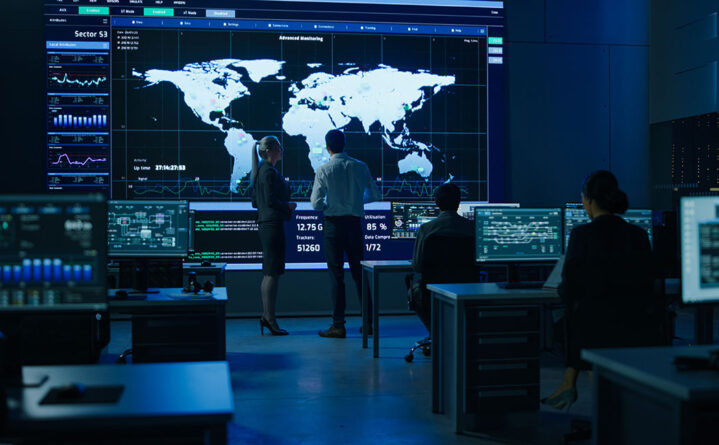
The assumption that cybersecurity monitoring is complete is dangerous because it ignores half of how attackers operate. Physical reconnaissance, facility testing, and insider behavior are all part of the threat landscape. When your security operations and cybersecurity strategies remain separate, you’re missing critical signals.
Integrated incident systems, real-time documentation, and cross-team visibility don’t just improve operational efficiency. They close a blind spot in your threat detection and fundamentally improve your ability to prevent and respond to attacks that span physical and digital domains.
FAQ
How do attackers use physical reconnaissance in cyberattacks?
Attackers often conduct in-person scouting before executing digital attacks. They observe building access controls, employee routines, security guard patterns, and facility vulnerabilities in person. This reconnaissance helps them identify physical entry points for social engineering, understand credential requirements, and locate sensitive infrastructure like server rooms or network closets. A person who successfully tested facility access three times before launching a phishing campaign is conducting a multi-stage attack, not running a random campaign.
What physical security incidents matter most to cybersecurity teams?
The most relevant incidents are unauthorized access attempts, social engineering incidents, facility testing, suspicious loitering or observation, badge or credential loss, and tampering with locks or access control systems. These all represent either direct threat activity or vulnerability discovery that precedes or accompanies digital attacks. Cybersecurity teams should also care about unusual employee behavior, terminated employees retaining access, and visitors with unclear business purposes.
Can physical security data really predict cyberattacks?
Not with certainty, but patterns in physical security incidents can indicate active targeting or sustained reconnaissance. Repeated access attempts, multiple reconnaissance visits, and timing correlation with digital anomalies all suggest organized threat activity rather than isolated incidents. When your cybersecurity team has visibility into these patterns, they can adjust their detection thresholds, increase logging, and strengthen monitoring for affected users or systems.
What’s the fastest way to integrate physical and cybersecurity operations?
Start with a centralized incident documentation system where all security events, physical and digital, flow into one platform. This doesn’t require replacing all your existing tools. A middle layer that aggregates incidents from your security operations system, access control system, and cybersecurity tools into a single incident database provides immediate visibility and enables correlation.
How do I get physical security and cybersecurity teams to collaborate?
Begin with shared threat modeling. Bring both teams together to define attack scenarios that cross both domains, and agree on how you’ll detect and respond to them. Establish regular threat briefings where both teams share recent incidents and anomalies. The more they see incidents from the other domain, the more they understand the value of collaboration.
Why do most organizations still keep these teams separate?
Historically, physical security was treated as building operations, and cybersecurity was treated as IT infrastructure. They reported to different leaders, operated different systems, and spoke different languages. As attacks have become more sophisticated and frequently span both domains, this separation has become a liability. Organizations that break down these silos gain a significant advantage in threat detection and response.