
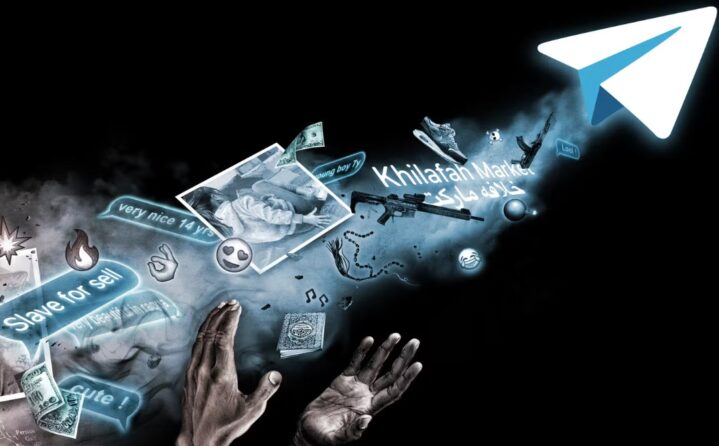
The cybercrime landscape has evolved significantly in recent years. That evolution has fundamentally changed how security teams deal with threat actor profiling. As threat actors have made the transition from a more rigid darknet to more agile encrypted messaging platforms, the need for a new type of intelligence has emerged.
Enter Telegram threat intelligence. It’s one of the most fertile environments for connecting the who’s and how’s of modern cyberattacks. When used in concert with threat actor profiling, Telegram threat intelligence can help analysts do things that were not possible as recently as ten years ago.
Building a Dossier With Telegram Information
The threat intelligence experts at DarkOwl explain that creating an effective threat actor profile requires more than just technical indicators. It requires a unique understanding of threat actor behavior, affiliations, and technical maturity. That’s information Telegram threat intel offers in spades. Analysts can harvest a wealth of data points:
- Communication styles – Threat actors have language and communication styles just like the rest of us. Through sophisticated intelligence, analysts can take a deep dive into language, slang terms, time zones, etc., that can all point to a threat actor’s geographic location or national origin.
- Tools of the trade – Strangely, threat actors frequently use Telegram to show off what they are doing. It is not unusual for them to share screenshots of their work, including custom scripts and specialized malware. All of that information can be tracked and categorized.
- Community reputation – Cybercriminals and hackers belong to a very close-knit community. Likewise, Telegram is a highly social platform that gives the community voice. A threat actor’s reputation within that community is very important. So analysts pay attention to community reputations to determine an actor’s level of sophistication and determination.
- Monetization methods – Money is the primary motivation in most cyberattacks. Being able to track monetization methods on Telegram gives analysts even more information they can plug into a threat actor profile.
A good profile is a comprehensive one. It accommodates as many data points as possible to give analysts a fuller understanding of who their adversaries are, what they are capable of, and what they might be planning next.
How Threat Actor Profiles Address Risk
It’s important to remember that the most successful analysts do not treat threat actor profiling and Telegram threat intelligence as siloed strategies. Rather, those two strategies are combined for maximum impact. The question is this: how do threat actor profiles enhanced with Telegram data address actual, real-world risk?
First and foremost, an enhanced threat profile encourages better anticipation of potential tactics. For example, imagine a profile revealing that a known threat actor has recently shifted from RDP access to a known brand of info stealer. The security team can adapt defenses to address the appropriate vulnerabilities. Enhanced profiles also lead to:
- Better risk severity analysis.
- Proactive deception techniques and takedowns.
- Improved brand and executive protection.
Think of a threat actor profile enhanced by Telegram threat intelligence as a more complete picture. Prior to applying Telegram data, analysts may have had a cloudy view of a threat actor they knew little about. But when that extra data is added, the view becomes much clearer.
The whole point of building threat actor profiles is to better understand threat actors, what they do, how they do it, and what their goals are. The more information an analyst can glean on a particular threat actor, the more information he has to build a comprehensive profile. Poking around Telegram and gleaning data from it offers yet another way to build the most comprehensive profile possible.
Turning Telegram Signals Into Actionable Priorities
Telegram threat intelligence becomes especially valuable when analysts use it to prioritize what deserves immediate attention. Security teams already have more alerts than they can reasonably investigate. A threat actor profile helps them decide which signals are routine noise and which ones point to a developing threat.
For example, a random Telegram user claiming to sell corporate credentials may not carry much weight on his own. But if that same user is already connected to a known access broker, has a history of valid leaks, and is interacting with ransomware affiliates, the risk changes dramatically. The intelligence moves from vague chatter to something the organization can act on.
That action might include forcing password resets, tightening remote access controls, monitoring executive accounts, or watching for specific malware behavior. The goal is not simply to collect information. The goal is to turn that information into defensive choices.

Connecting Behavior to Likely Targets
Threat actor profiling also helps analysts determine which organizations, industries, or individuals may be at greater risk. Many actors show patterns over time. Some prefer healthcare systems. Others focus on financial services, gaming platforms, government contractors, crypto companies, or high-profile executives.
Telegram can reveal those preferences in subtle ways. Actors may discuss preferred targets, complain about certain security tools, request access to companies in specific regions, or advertise stolen data from the same industry again and again. Those conversations help analysts connect behavior with intent.
When that information is added to a profile, security teams can make better judgments. A company does not need to panic every time its industry is mentioned. But if a credible actor has targeted similar organizations before and is now asking for access related to that sector, the warning deserves attention.
Strengthening Executive and Brand Protection
Telegram threat intelligence is also useful outside traditional network defense. Threat actors often discuss executives, employees, customers, brands, and public-facing assets. They may share leaked documents, stolen credentials, fake domains, phishing kits, or screenshots meant to prove access.
A detailed threat actor profile helps analysts judge how serious those posts are. Some actors chase attention. Others use public claims as part of extortion. Some are middlemen selling access to more dangerous groups. Each case requires a different response.
With the right profile, brand protection teams can move faster. They can identify impersonation campaigns, monitor for leaked employee data, track fake support channels, and coordinate takedown efforts when needed. Executive protection teams can also watch for targeted doxxing, credential exposure, or threats tied to specific public events.

Making Profiles Stronger Over Time
Threat actor profiles are never finished. They need to change as actors change. Telegram gives analysts a steady stream of behavioral clues that can confirm old assumptions or challenge them.
An actor may switch tools. He may join a new group. He may move from selling logs to selling network access. He may begin targeting a different region or industry. Each new clue makes the profile more useful.
That is why Telegram threat intelligence and threat actor profiling work best as a continuous process. The more analysts connect new activity with past behavior, the clearer the adversary becomes.