If you’ve ever switched on your AC after months of sitting idle and been hit by a wave of musty, stale, or just plain wrong-smelling air, you’re not alone.
It’s one of the most common reasons people call an HVAC service at the start of summer. The good news is that most first-startup smells are explainable, and many are preventable. Here’s what’s actually going on inside your system.
Why Does My Air Conditioner Smell When First Turned On?
Your AC sat dormant for months, and in that time, it became a very comfortable home for things you don’t want to breathe.
The most common culprit is the evaporator coil and drain pan. When your AC runs, it pulls humidity out of the air. That moisture condenses on the cold evaporator coil and drips into a drain pan below it.
When you shut the system down for winter, that residual moisture, along with any dust, pollen, and organic debris that settled on the coil, sits in a warm, dark, humid space for months. That’s a perfect incubator for mold, mildew, and bacteria. The result is a system where the AC smells stale or worse the moment you flip it back on.
The ductwork compounds this. Your ducts collected dust, dander, and microscopic debris all year. Return air ducts make it worse, they pull air from wall cavities, attics, and crawlspaces, dragging whatever’s in those spaces directly into the system. First startup blows all of that loose at once, which is a big part of why the AC smells bad when first turned on even if it was running fine the previous season.
The drain line is another hidden source. If the condensate line didn’t fully dry out, the standing water inside it can turn stagnant or grow a biofilm over winter.
Finally, some smells come from outside the AC itself, rodents or insects that built nests in your outdoor unit or ductwork during the off-season, dead insects on the heat exchanger, or even a small animal that got into the system. Any of these can make the air conditioner smells situation noticeably worse than expected.
Most Common AC Smells and What They Mean
Musty/earthy/old basement means mold or mildew on the evaporator coil, drain pan, or in ducts, moderate urgency, address it, but not an emergency. Dirty socks/locker room is bacteria buildup on the evaporator coil (“Dirty Sock Syndrome”), at the same level, needs coil cleaning. Burning/electrical could be dust burning off components, or overheating wiring/motor, high urgency, turn it off and investigate.
Rotten eggs/sulfur means a natural gas leak if you have gas appliances near the air handler. Immediately leave and call the gas company. Sweet / chemical / ether-like points to a refrigerant leak, high urgency, freon is harmful and the system won’t cool properly.
Dead animal/rotting means a rodent or bird in the ductwork or unit, moderate-high, needs removal ASAP. Exhaust/chemical fumes suggest a fluid leak near the motor, or backdrafting from a nearby combustion appliance, high urgency, investigate the source.
Stale/dusty that fades quickly is normal first-startup dust burn-off, low urgency, usually clears in 15-30 minutes. Cigarette smoke means smoke absorbed into insulation, filters, or ductwork lining over time, low urgency, but it won’t go away on its own.
Air Conditioner Smells Musty When First Turned On: Here’s Why
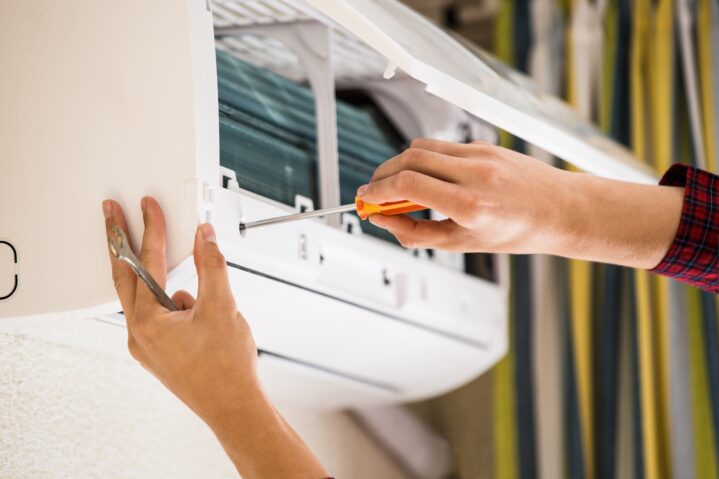
True mold/mildew grows on the evaporator coil and in the drain pan when moisture sits long enough. When the air conditioner smells musty when first turned on, the smell is earthy and damp, like a wet basement or old books.
You’ll often see dark spots or a fuzzy coating on the coil fins if you inspect them, though mold on evaporator coils rarely looks fuzzy or black, it typically looks like a gray or dusty coating that most people mistake for ordinary dust.
It almost always grows on the back side of the coil, facing away from the airflow, which means DIY coil sprays applied from the front often miss the actual source entirely. That’s why the smell comes back quickly after a DIY cleaning.
Bacteria on the coil, specifically what HVAC techs call “Dirty Sock Syndrome”, smells different from mold. It’s more like a locker room or unwashed laundry. This is caused by a specific bacterial strain that thrives on the evaporator coil during partial cycles where the coil doesn’t get fully cold. It’s very common in heat pumps or systems that run mild cooling cycles in spring and fall.
The drain pan and condensate line can also grow a bacterial biofilm that smells sour or swampy rather than earthy, standing water that went stagnant, not necessarily active mold growth. In these cases the AC smells less like classic mildew and more like a neglected sink drain.
Most musty AC smells involve some combination of all three, and distinguishing them matters less than knowing that all three have the same solution, clean the coil, treat the drain, and address the source of the moisture.
What it’s almost certainly not is the ducts themselves growing mold. Ductwork mold is real but rare and requires a sustained moisture source (like a duct leak near humid crawlspace air). The vast majority of “musty AC” complaints trace back to the evaporator coil area.
AC Smells Bad When First Turned On: Common Causes
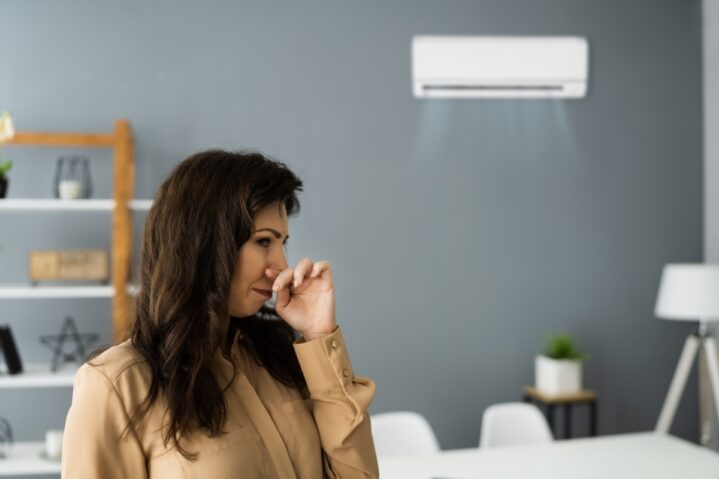
Because “fine last season” means it was fine when you were running it regularly, not fine during the months it sat afterward.
The system wasn’t running long enough last fall to dry itself out. If you shut down during the first cold snap, the coil and drain pan may still have had residual moisture in them when you closed everything up.
Something changed in the ductwork or unit over winter, a drain line that was sluggish but functional may have fully clogged, or a small amount of mold that wasn’t enough to notice last year had eight more months to grow. A rodent that didn’t cause a smell last year may have nested this year. These are all reasons the AC smells bad when first turned on even when nothing seemed wrong at shutdown.
Your home’s humidity may also have been higher last off-season, a wetter winter or a basement humidifier running overtime can drive humidity into ductwork and create conditions that didn’t exist before.
And as evaporator coils age, the fins can pit and corrode slightly, creating more surface area for biofilm and mold to cling to. A three-year-old system that smelled fine on startup may smell noticeably worse at year seven or eight.
“It was fine before” isn’t a reliable predictor, because the conditions during the off-season are what matter.
AC Smells When First Turned On: Harmless or a Warning Sign?
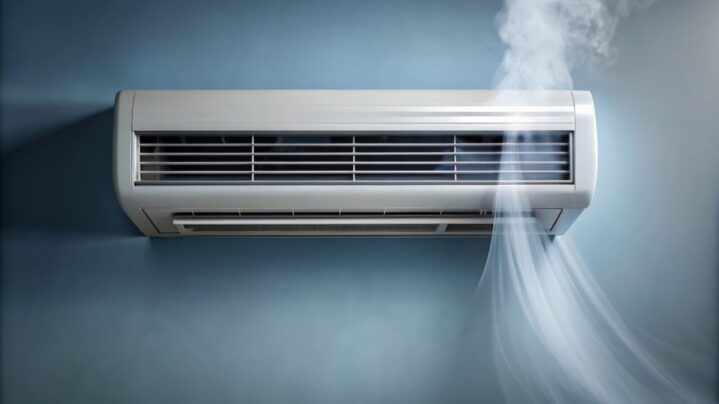
Brief dusty or stale smell in the first 15-30 minutes of operation is dust and particles on internal surfaces burning off or blowing loose, if it clears quickly, it’s benign. A faint musty smell that fades significantly within the first few hours is often surface-level mildew on the coil that gets dried out by airflow. Worth cleaning preventively, but not an emergency.
When the AC smells when first turned on and the odor lingers for days rather than hours, that’s a different story. A persistent musty smell that doesn’t fade after a day or two of running means the mold or bacterial source is significant enough that airflow alone won’t clear it.
Dirty sock smell won’t go away on its own, the coil needs to be professionally cleaned. Dead animal smell will get worse, not better. None of these are emergencies, but don’t ignore them.
A burning smell that doesn’t go away after 30 minutes, or that smells electrical, like burning plastic or hot metal, could be a failing capacitor, overheating motor, or wiring issue. These are fire risks; turn the system off and investigate.
A sweet, ether-like, or chemical smell points to a refrigerant leak, which is harmful to breathe and a sign the system needs repair before it can cool properly, newer refrigerants like R-32 and R-454B are nearly odorless at small leak quantities, so don’t wait until you smell something to have the system checked on a modern unit. Rotten egg or sulfur smell is the odorant added to natural gas, if you smell this with your AC on, don’t assume it’s the AC. Leave the house and call your gas utility immediately.
How to Fix AC Smells Yourself
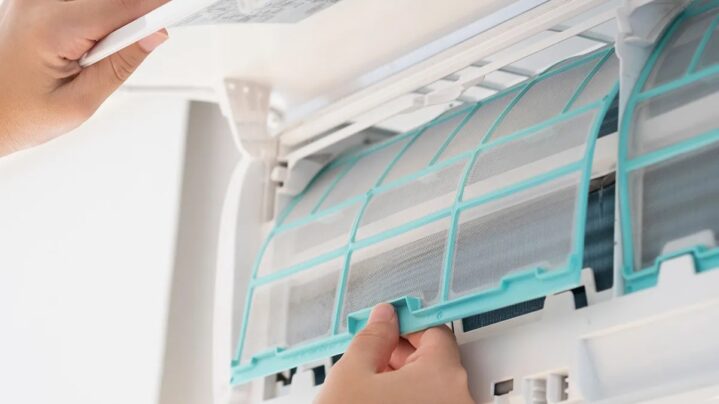
The honest answer is: it depends on where the source is, not how handy you are. On most residential systems you physically cannot reach the back of the evaporator coil, the blower wheel, or the inside of the drain pan without removing panels, sometimes the coil itself. If those are the source, no spray-through-the-vent product will reach them regardless of what the label says.
DIY is reasonable for replacing the air filter, do this first, every time, as a clogged or dirty filter restricts airflow and keeps moisture in the system longer. You can also clean the condensate drain line by pouring a cup of white vinegar or a diluted bleach solution (1:16 bleach to water) down the access point near the air handler to clear biofilm and slow drains, do this 2-3 times a year.
If you can access the drain pan, wipe it with a diluted bleach solution and let it dry. Self-rinsing foaming coil cleaners sold at hardware stores can clean surface-level mold and biofilm from the front face of the evaporator coil without disassembling anything, they’re genuinely effective for mild cases where the air conditioner smells are caught early. HVAC duct sprays and foggers have limited evidence but can help with mild duct odors.
Call a professional for any electrical or burning smell that persists, any refrigerant smell (adding refrigerant requires an EPA 608 certification), heavy visible mold growth on the coil, a dead animal in inaccessible ductwork, or Dirty Sock Syndrome that came back after a DIY coil cleaning, the bacteria survives standard foaming cleaners, and an alkaline cleaner at pH 11+ or a hydrogen peroxide treatment is needed.
A professional coil cleaning runs $100-$300 depending on your market and system accessibility. If you’ve cleaned the drain, replaced the filter, and the AC smells when first turned on persists through a full week of operation, it’s worth the call.
How to Prevent AC Smells When First Turned On
It’s all about not giving moisture a place to sit and biology time to happen.
Before shutting down for the season, run the system on fan-only mode for 30-60 minutes, this dries out the evaporator coil and drain pan and is the single highest-impact thing you can do to prevent the air conditioner smells musty when first turned on problem next spring.
Pour a cup of white vinegar down the condensate drain line to kill any biofilm before it has months to grow. Drop a condensate pan tablet in the drain pan, these slow-dissolve biocide tablets (sold as “Pan Treats” and similar) release a continuous mild antimicrobial that prevents algae and biofilm from forming all season.
They cost about $10 and prevent the majority of musty smell issues; almost nobody talks about them but HVAC technicians use them routinely. Replace the air filter so you’re starting next season with cleaner airflow from minute one.
During the off-season, if you live in a humid climate, run your system occasionally, even just fan mode, to circulate air and prevent the stagnant conditions mold loves. Check your outdoor unit for debris, nesting material, or signs of animals; a pest-deterrent spray around the base is cheap insurance.
At startup, open windows for the first 15-30 minutes while the system runs to let the first-run air purge outside rather than recirculate. If AC smells bad when first turned on is a recurring problem year after year, an in-duct UV-C light installed near the evaporator coil continuously kills mold spores and bacteria between seasons, $150-$400 installed and genuinely effective for chronic cases.